2015年5月25日星期一

Beyond the Great Wall- Enjoy the Natural Beauty of China

When people talking about visiting China, the Great Wall is always the first thing to pop out. Since China is country with a long history and rich culture, there is a lot historic sites to explore. However, the natural beauty of China is not inferior to its historic sites. China is a large country with diverse landscape. The mountains, rivers, lakes, glasslands have its unique features. The following is a few natural attractions worth visiting.


1. Shangri-la


Shangri-La is located in Yunnan Province, China. It has become famous since the publish of “Lost Horizon”. The rich natural resources and unique local culture make it a perfect tourist destination.


2. Jiuzhai Valley


Jiuzhai Valley is located in Aba autonomous prefecture, north of Sichuan Province. It is a natural reserve which is famous for its colorful waters, primitive forests and zoological and botanical resources. The scenic area shows different scenery in different seasons. The most colorful season is autumn.


jiuzhai valley


3. Mt.Huangshan


As the famous saying goes “If you have visited Mt. Huangshan, then you don’t need to visit other mountains in China”, Mt.Huangshan has always been a popular tourist destination in both home and abroad. Mt. Huangshan has almost all the unqiue features that a mountain could have. The steep cliffs, dense pine trees, stones of odd shapes, amazing cloud sea, high peaks, deep valleys and hot springs describe the secret workings of nature.


mt huangshan


4. Guilin


As the famous Chinese saying goes “Guilin’s scenery is peerless in the world” , Guilin has always been a popular tourist destination for people from both home and abroad. Travelling in Guilin is a way of getting close to nature. With its unique karst landscape and charming hills, rivers and terraces, Guilin is definitely a city worth exploring.


5. Zhangjiajie


Located in Hunan Province, Zhangjiajie is known as a famous tourist city. When people say that they go sightseeing at Zhangjiajie, they usually means Wulingyuan Scenic Area. Wulingyuan Scenic Area covers an area of nearly 400 square kilometers. It is composed of Zhangjiajie National Forest Park, Tianzi Mountain Natural Resort and Suoxiyu Natural Resort, Yuanjiajie and Yangjiajie. It has become more popular since one of the attractions named Qiankun Column is known as the prototype of floating Hallelujah Mountain in the movie Avatar.


6. Linzhi


Linzhi has the lowest altitude in Tibet, which is 3100 meters in average. People may picture Tibet with less plants. However, Linzhi is not the case. It is the fairyland of Tibet with beautiful scenery and rich botanical resources. Yarlun-tzanpo River Valley is the deepest valley in the world.


7. North Xinjiang


North Xinjiang is famous for its amazing natural scenery. The mysterious Kanas Lake and beautiful Hemu Village has attractted more and more visitors. The best time to visit North Xinjiang is in September.


hemu


8. Grassland in Inner Mongolia


Xilin Gol Grassland and Hulun Buir Grassland are the most famous and biggest grasslands in Inner Mongolia. The best time to visit the grassland the in July and August when the grass is at its best.


More China tour destinations.


Beyond the Great Wall- Enjoy the Natural Beauty of China

2015年5月24日星期日

Xian City Wall

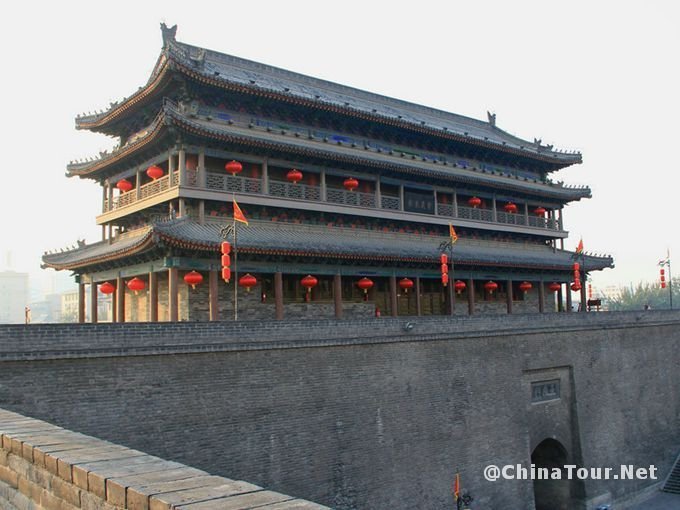
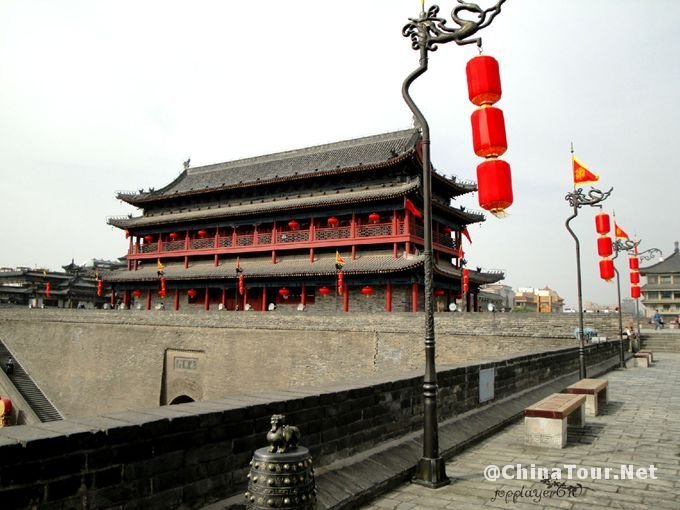
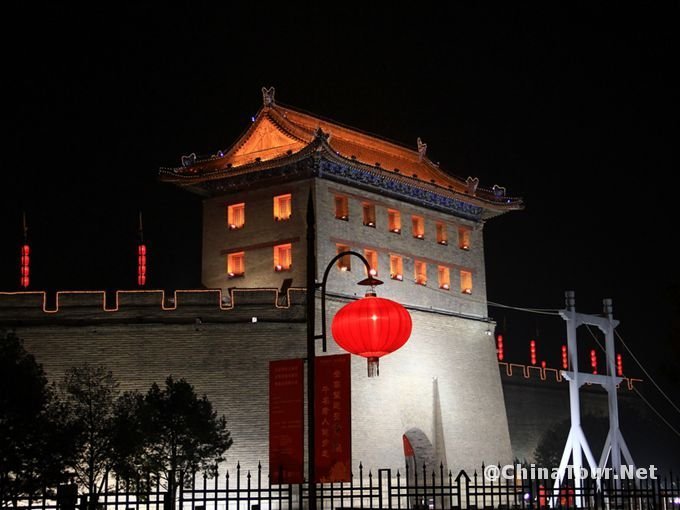
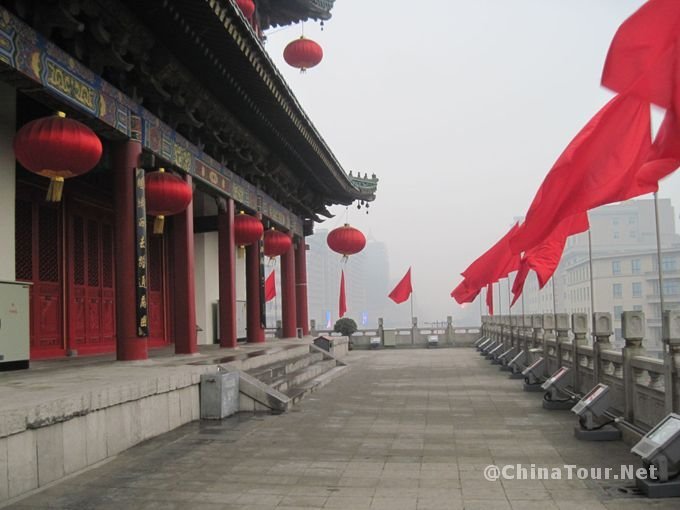
Xi’an is one of the few cities in China where old city walls are still visible.The city wall of Xi’an is an extension of the old Tang Dynasty structure, as a result of this wall building campaign. Xi’an’s city wall after its enlargement in the Ming Dynasty stands 12 meters high. It is 12-14 meters across the top, 15-18 meters thick at bottom and 13.7 kilometers in length. There is a rampart every 120 meters. The ramparts are towers that extend out from the main wall, the top of the rampart being at the same level as the top of the wall.  The distance between two ramparts is just within the range of arrow shot from either side. This allowed soldiers to protect the entire wall without exposing themselves to the enemy. There are altogether 98 of them on the wall; each has a sentry building on top of it. The weapons in ancient times were primitive. The gates of the city wall were the only way to go into and out of town. Therefore, these gates were important and strategic points, that the feudal rulers racked their brains to try to defend.


Xian City Wall

2015年5月22日星期五

Wild Goose Pagoda

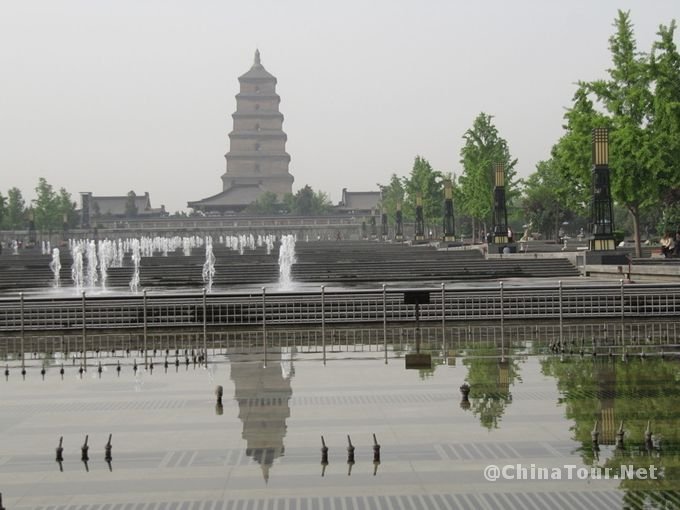
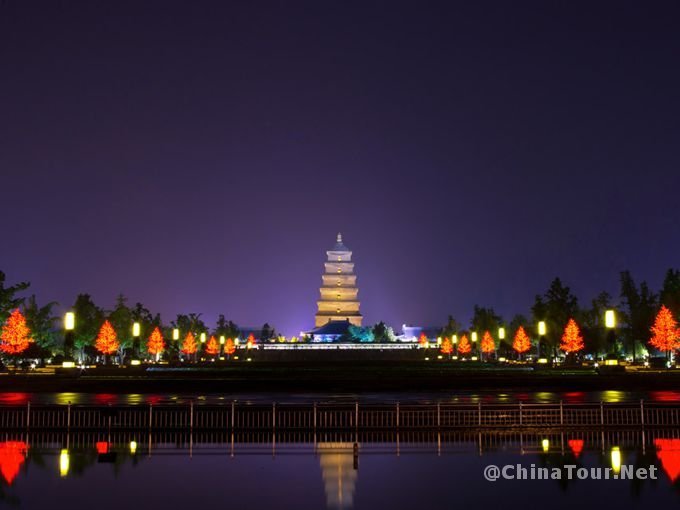
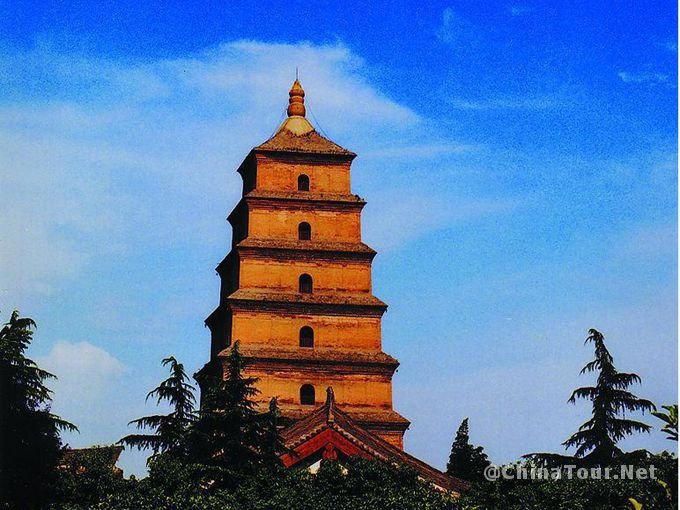
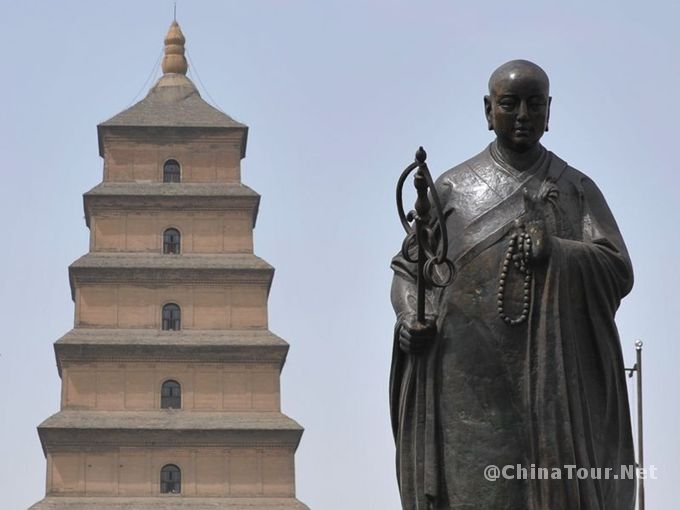
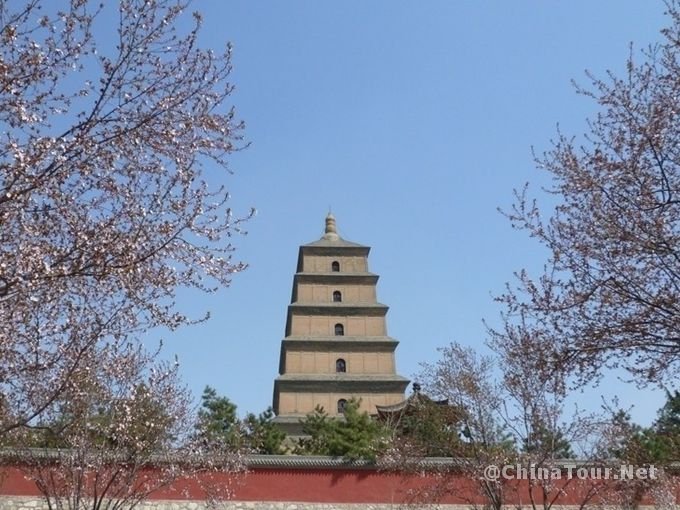
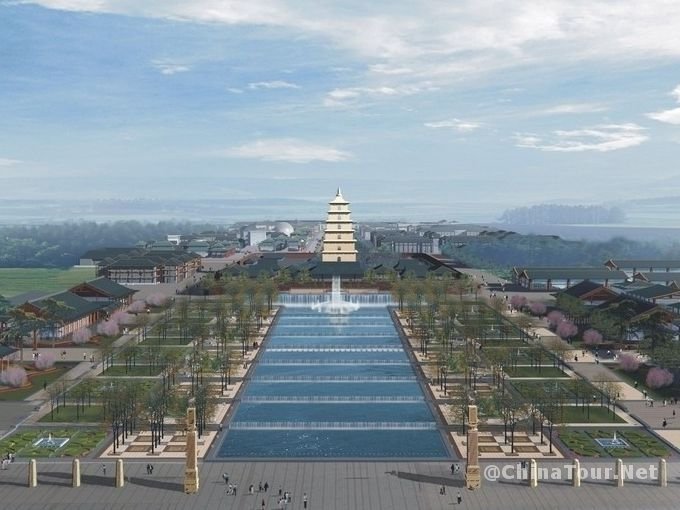
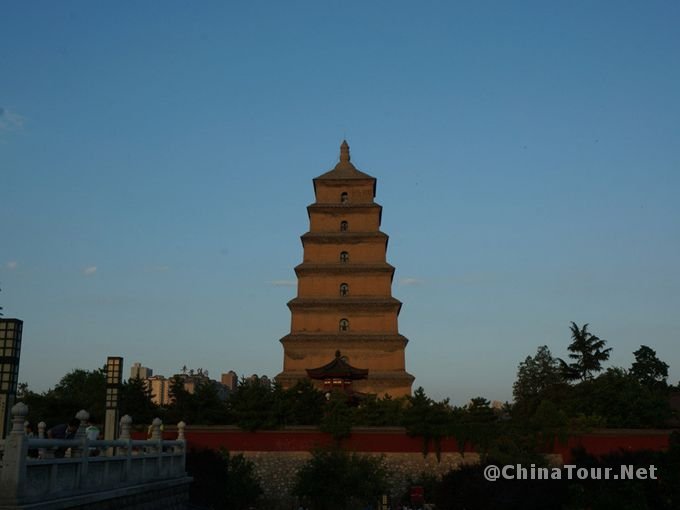
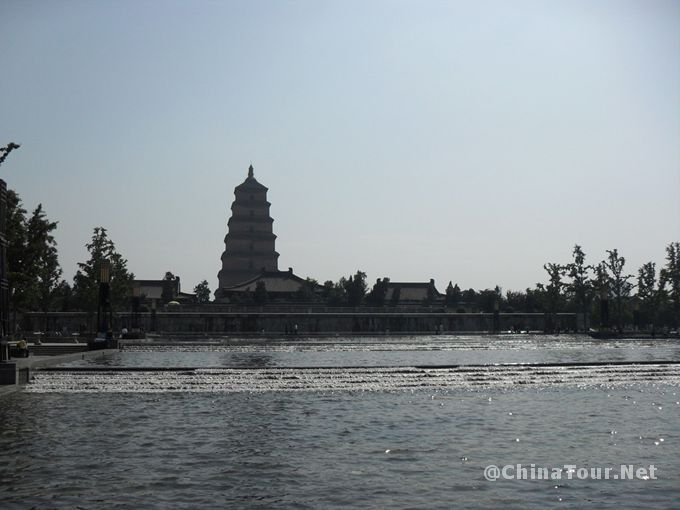
The Wild Goose Pagoda was built in Tang Dynasty. Its history dates back to 1300 years ago. It was inscribed as a world heritage by UNESCO in 2014. The pagoda is a seven-story building, which is 64.5 meters high. It is a landmark of Xi’an. There are seven stories in the tower.


The pagoda is named after the story of Xuanzang’s journey to the west. Xuanzang is an eminent monk in Tang Dynasty. After he had gone on a pilgrimage for Buddhist scriptures in Tianzhu, known as India now, the pagoda was built to store the scriptures and Buddhist relics he brought from India.


Ticket information


Ticket fare: CNY50 (Additional CNY30 if you would like to climb the tower)


Opening hours: 09:00~17:00


Wild Goose Pagoda

High-speed Trains Make an Easier Trip around China

China has been putting a lot of effort to built a high-speed train network over the country. High-speed trains in China usually refer to the trains with a running speed of 200~350 km/h. If you would like a tour in China, high-speed trains will help you a lot to save time and energy. These trains are usually very punctual and less influenced by the weather. The seats of the high-speed trains are comfortable, which can be classified into Bussiness Class, First Class and Second Class.
The high-speed train network covers most major cities in China, including many tourist cities, such as Beijing, Xi’an, Shanghai as well as Guilin, Kunming, Hangzhou, Luoyang, Huangshan and etc.

The train number of high-speed trains start with an “G”,”D” or “C”. G trains usually run faster than D trains. C trains are inter-city express trains, such as Beijing-Tianjin Trains. Book a Train Ticket
Silk Road Railway Route

Xian-Lanzhou-Jiayuguan-Dunhuang-Turpan-Urumqi
Xi’an is one of the most famous ancient capitals in Chinese history. It is also the starting point of Ancient Silk Road. Though high-speed trains haven’t been available between Xian and Lanzhou, there are night trains which save time and money. It takes about 4 hours from Lanzhou to Jiayuguan by bullet trains. Normal fast trains are available between Jiayuguan and Dunhuang. If you would like to travel a bullet train to Turpan, you may need a detour and take trains from Jiayuguan to Turpan. It takes about 6 hours from Jiayuguan to Turpan and 1 hours from Turpan to Urumqi.


Nanjing-Suzhou-Shanghai-Hangzhou

The down-river area of Yangtze River has always been one of the richest areas in China down the ages. Nanjing and Hangzhou were once the capitals in Chinese history and also famous historic cities. Suzhou is famous for its traditional gardens. Zhouzhuang, one of the most beautiful water towns in China, is also located in Suzhou. Shanghai, needless to say, is an international metropolis in China. This route is totally a collision of tradition and modernity. It takes less than 2 hours to travel between these cities by bullet trains.

Guilin

High-speed trains of Guilin have been available this year. It takes about 2.5 hours from Guangzhou to Guilin and Guiyang to Guilin.


Mt.Huangshan

High-speed train between Shanghai and Huangshan will be available since July this year.


Xian-Luoyang

It takes about 1.5 hours to travel between Xian and Luoyang. Luoyang is famous for its Longmen Grottoes and Baima Temple.


High-speed Trains Make an Easier Trip around China

Bell Tower

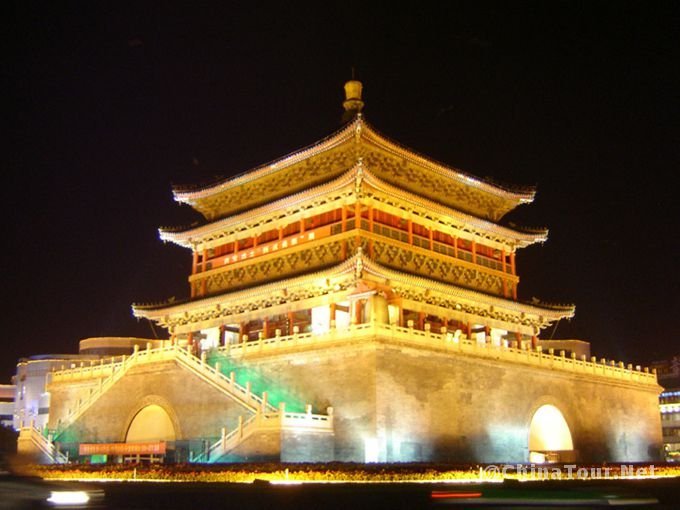
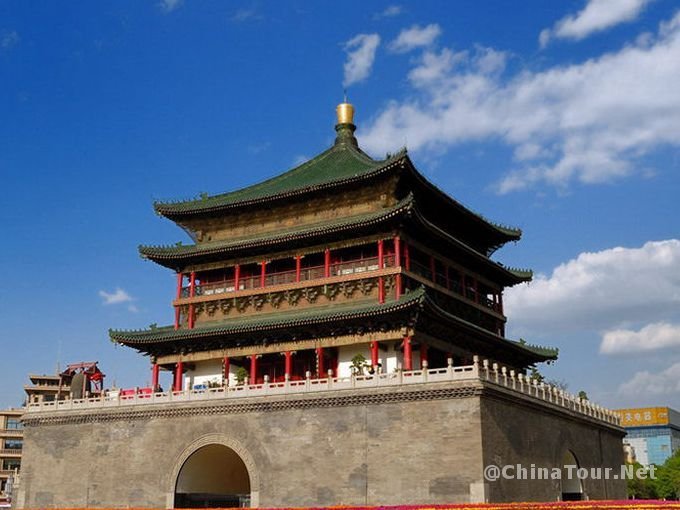
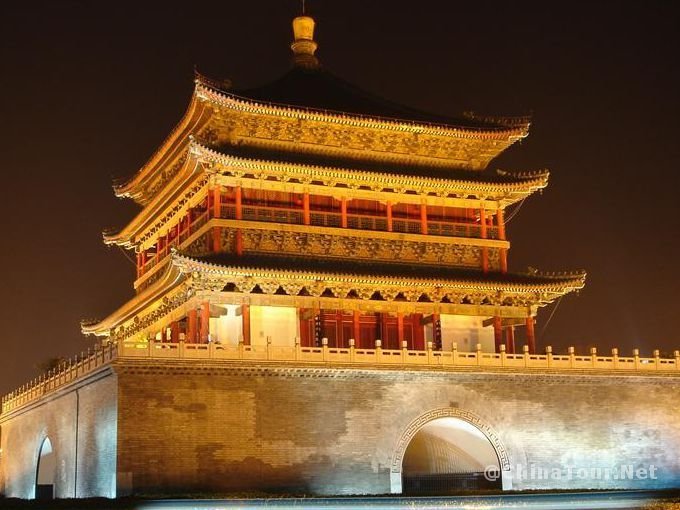
Xi’an Bell Tower is located in the center of the city. It was built in the 17th year of Emperor Zhuyuanzhang’s reign in Ming Dynasty. The Bell Tower is a three-story wooden structure topped with dark green tiles. It is a grand ancient building with traditional Chinese architectural features. The initial location of the tower is not the place it is located now. It was first located at Yingxiang Temple, which is opposite of Drum Tower and also the center of the city at that time. With the expansion of the city, the location of the tower is not the center of the city any more. In the year of 1582, the whole tower was moved to the new location. The whole tower was rebuilt with the original parts except the tower base. This kind of reconstruction was rarely seen in the history of world architecture.


A large iron bell in the tower used to mark the time each day, hence the name. There are musical performances inside the tower every afternoon and most mornings.

Entrance fee: CNY35 (CNY50 for through ticket of Bell Tower and Drum Tower)

Opening hours: 8:00-22:00(April 1st- October 31st)

8:00-17:30(November 1st- March 31st next year)


Bell Tower

2015年5月21日星期四

Qin Terra-cotta Warriors and Horses

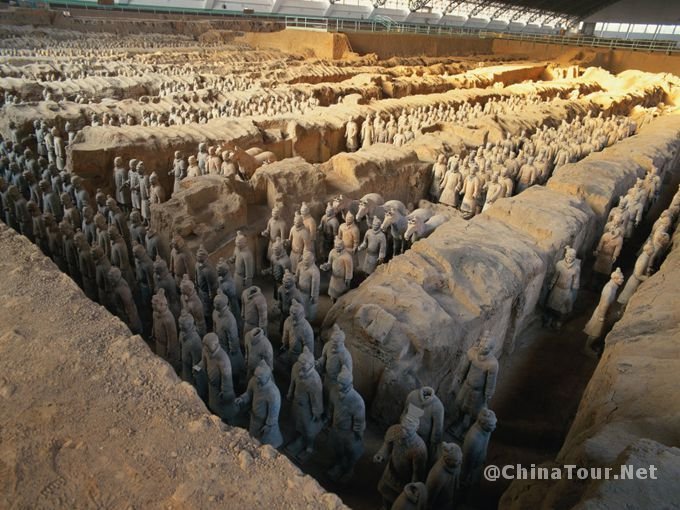
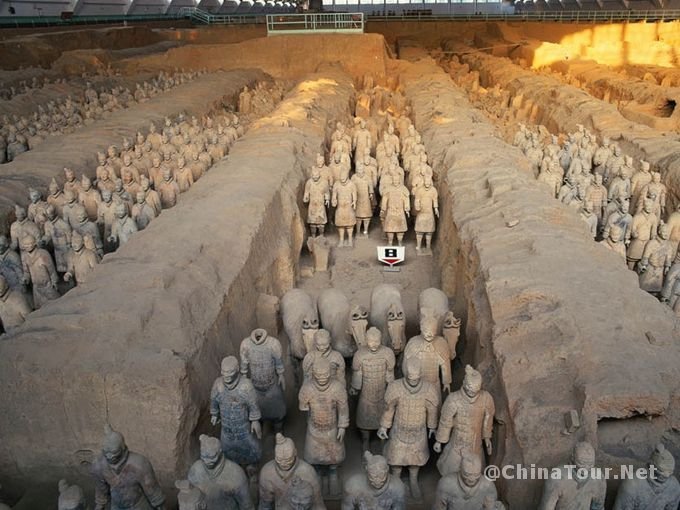
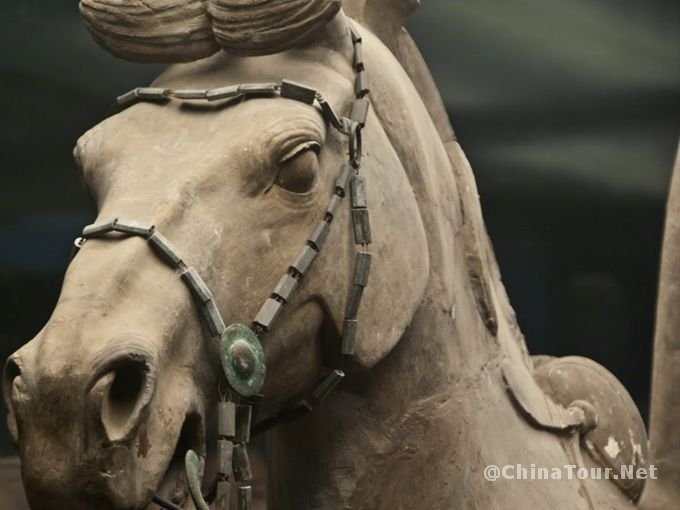
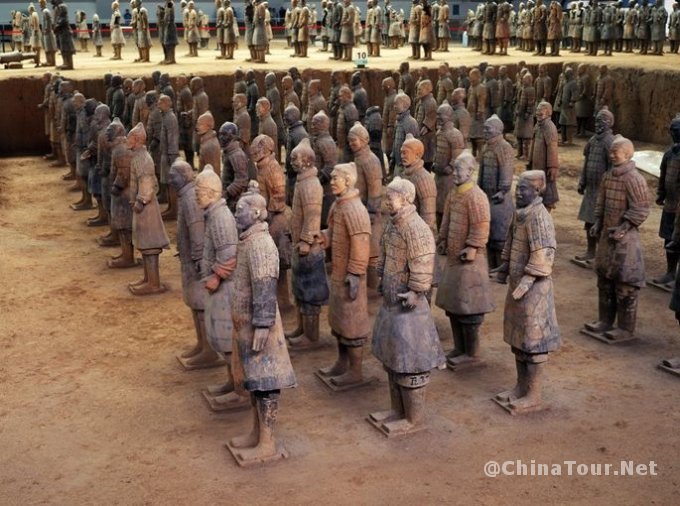
The museum is located in Lintong District in Xi’an City. It was built during 246 B.C. and 208 B.C. Nearly 8000 clay warriors and horses as big as the real ones have been unearthed so far. It was described as the one of the eight wonders in the world and one of the greatest archaeological discoveries in the twentieth centuries.


Chinese emperors usually began to built their tombs when he was alive. Qin Shi Huang began to build his tomb soon after he became an emperor. In ancient China, when a person died, especially someone of high status or with wealth, there would be someone or something to be buried with the dead. The Qin Terra-cotta Warriors and Horses were built to be buried with First Emperor of Qin when he died. It takes about 40 years to finish the whole project. Over 700 thousand labors took part in the construction of the Qin Terra-cotta Warriors and Horses.


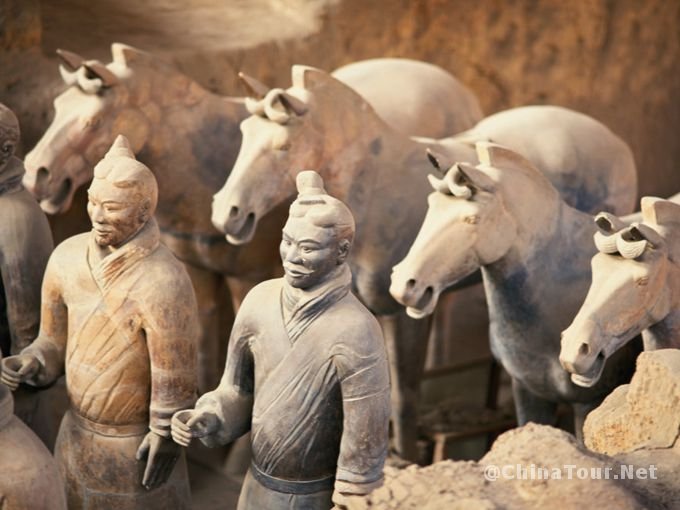
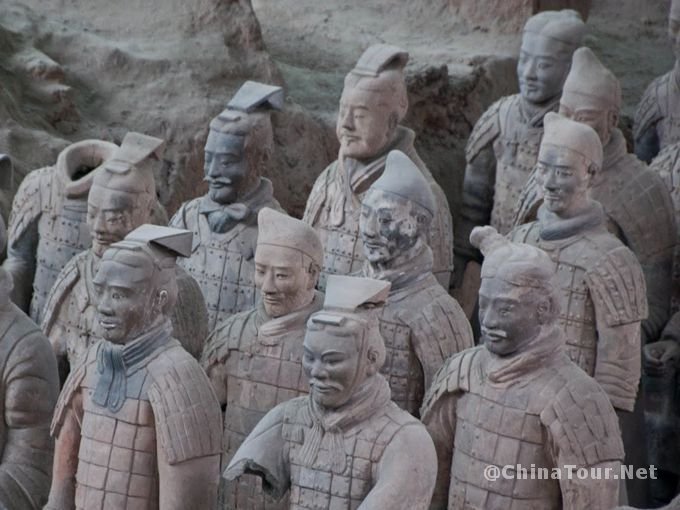
Three pits of clay warriors and horses have been discovered for now. These three pits covers an area of over 20 thousand square kilometers. There are all kinds of warriors and horses. The weapons the warriors holding are all made of metal, which can be used in real wars. It indicates that Qin Dynasty’s metallurgical technology and weapon-manufacturing technique already had reached quite a high level. No wonder people say that it is an underground army. The warriors are all well-made and each of them looks different. It seems that each of the warriors are created with a prototype. They just look like real persons with different actions or expressions.


As a World Heritage, the UNESCO describes it “features a high level of integrity; the grave mound, mausoleum constructions, burial pits, sites of ritual construction and overall setting in the property area and the buffer zone are well preserved, and fully reflect the structure and ritual system of the whole mausoleum.”


Location: Qinling North Road, Lintong District, Xi’an.

Entrance fee: CNY150 (March 1st-November 30th)

CNY120 (December 1st-February 28th)


Recommended tours:


1 Day Private Tour: Terra-cotta Warriors, Wild Goose Pagoda, City Wall, from $95
1 Day Coach Tour: Terra-cotta Warriors and Banpo Museum, from $74     >> more Terra-cotta Warriors Tours


Qin Terra-cotta Warriors and Horses