2015年9月18日星期五

Pandas Breeding Centre

Panda Breeding &Research Center , Chengdu


panda


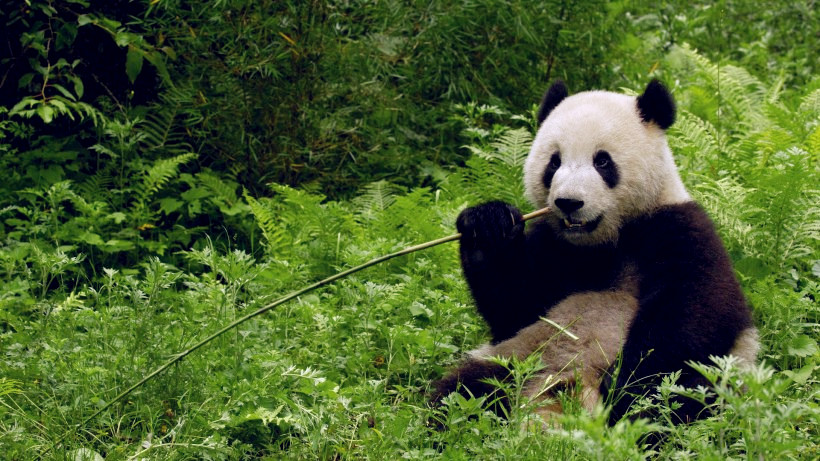
Located just 10km (6miles) away from downtown Chengdu, the Chengdu Panda Breeding Research Center has been created and imitates the pandas’ natural habitat in order that they might have the best environment for rearing and breeding. The Center cares also has other rare and endangered wild animals. The Research Center covers an area of 560 mus (92 acres), 96% of which is verdure. Giant pandas, lesser pandas, black-necked cranes, white storks as well as over 20 species of rare animals are fed and bred there throughout the year. Verdant bamboo, bright flowers, fresh air, a natural hill scene and a beautiful artificial view are merged ingeniously at the base.


The Giant Panda Museum


The Giant Panda Museum was opened in 1993 to further scientific education and to improve public awareness of the protection of both wild creatures and their environment. This is the world’s only thematic museum for rare and endangered animal species. The three main exhibitions are in the Giant Panda Hall, the Butterfly Hall and the Vertebrate Hall. The exhibits include all kinds of precious pictures, more than 800 materials and show more than 2140 different samples gathered in Sichuan. This excellent and comprehensive museum provides a wonderful venue for all who are interested in seeing something of the propagation and protection of the region’s natural bio-diversity.


Pandas Breeding Centre

2015年9月17日星期四

Good News: Forbidden City in Beijing to open wider to public

http://p4.so.qhimg.com/t016f4bca95ac9121f4.jpg


The Palace Museum in Beijing, also called Forbidden City, will be opened wider to the public announced by its administrators on 16, September.


Currently, there are about 65 percent of the Forbidden City is accessible to the visitors. According to the plan, 80 percent of the site will be open from 2020, and the long-term goal is 85 percent, compared with 30 percent 13 years ago.


Some administrative and ancillary facilities are being removed and old architecture renovated in preparation for the wider opening.


Good News: Forbidden City in Beijing to open wider to public

2015年9月16日星期三

Travel News: Fujian province to offer tourists tax refunds

Fujian province will offer tax refunds on purchases made by overseas visitors on Oct 1, 2015, after tax refund trials in Hainan province, Beijing and Shanghai.


So far, about 20 stores in Fujian have qualified for the program. The minimum purchase to obtain a tax refund is 500 yuan at any one store in a day.


Five ports have been confirmed as the first batch of ports to offer tax refunds, namely Fuzhou Changle International Airport, Quanzhou Jinjiang Air Harbor, Pingtan Straits High-speed Passenger Terminal, Xiamen Gaoqi International Airport and Xiamen Wutong Port.


According to the policy, overseas tourists (including those from China’s Hong Kong, Macao and Taiwan) who have stayed on the Chinese mainland for no more than 183 days may receive tax refunds on consumer goods purchased at designated department stores.


Travel News: Fujian province to offer tourists tax refunds

2015年9月15日星期二

More nations join Silk Road festival in Xi"an, Shanxi province.

http://www.chinaculture.org/attachement/jpg/site1/20150915/f8bc126e49161761a4380b.jpg


The Second Silk Road International Arts Festival began in Xi’an earlier this month, with monthlong exhibitions, dramas, dances and concerts planned by visiting artists and officials from countries that shared trade and cultural links with China along a network of overland and marine routes in ancient times.


This year, the festival that opened on Sept 7 in the capital of Northwest China’s Shaanxi province features artists and scholars from 62 countries and regions. In 2014, artists from some 30 countries attended the first edition of the cultural event.


Culture Minister Luo Shugang, who was also present at the opening this year, called the festival a “cultural project of China’s Belt and Road Initiative”, which will “drive the understanding of both Chinese culture and those of nations on the Silk Road”.


Lou Qinjian, governor of Shaanxi province, says: “The festival aims to boost cultural exchanges among people from various nations along the Silk Road.”


The festival features paintings by artists from 50 countries, including Lebanon, the United Arab Emirates and Oman.


Chinese ink painters from China National Academy of Painting are also presenting their works depicting landscapes they sketched during their travels to countries on the ancient Silk Road.


As part of ongoing festival, visitors to Xi’an can enjoy Bollywood dance performances, Latin concerts from Cuba and Mexico, modern dance from Israel and much more.


Drama groups from the Netherlands will stage children’s dramas for one week and performers from different provinces in China will also bring musicals and dramas mainly concentrating on stories from centuries ago along the Silk Road, routes used by Chinese traders to sell silk and porcelain abroad.


Other than performances, the festival also has lots of lectures and cultural seminars by scholars on topics of history, the arts and religion. Many of the scholars will speak in local universities during their stay in Xi’an.


Xi’an has held lots of cultural activities under the Belt and Road Initiative since last year, including a film festival and expo. The arts festival is going to be held annually, according to the provincial government.


As the capital city of the Tang Dynasty (AD 618-907), the city is considered the starting point of the ancient Silk Road.


It has for long contributed to China’s interactions with the world, says Zheng Xin-miao, former director of the Palace Museum in Beijing, who attended this year’s festival.


The city should have the confidence and the ability to promote Chinese culture, he adds.


More than 2,000 years ago, Xi’an started frequent trade exchanges with Asian and Arab nations.


“When I stand here and look back at our history, I can hear the ringing of bells around the necks of camels in the desert,” Zheng says.


More nations join Silk Road festival in Xi"an, Shanxi province.
2015年9月10日星期四

Fubo Hill

Fubo(wave-subduing) Hill to the northeast of downtown Guilin by the Lijiang River has the Xinxi Marquis Temple built during the Tang Dynasty (618-907). The title of Xinxi Marquis was given to Fubo General Ma Yuan, so the name of the mountain. Half of the graceful lone peak of the hill is in the river and the other half is on land. During flood season turbulent currents explode against the hill rocks. On the top of the hill one sees an exquisite scenery like a traditional Chinese painting. Inside the “Return the Pearl” Cave, also known as Fubo Cave in the mountain side, there are the “Try the Sword” Rock, the 1,000-Buddha Crag (Buddha images carved on stone), and many carvings on the cave walls. Among the best carvings is a self-portrait of Mi Fu, a famous painter, and a poem by Fan Dacheng, a famous poet, both from the Song Dynasty (960-1279).


Fubo Hill

Good news: Nanjing to start 72-hour visa-free transit policy.

Nanjing, the capital of East China’s Jiangsu Province, will offer 72-hour visa-free entry policy for international passengers from 10 September, 2015.


Nanjing is the 16th city in the Chinese mainland to embrace the policy, following Beijing, Shanghai, Guangzhou, Xi’an, Kunming, Chengdu, Chongqing, Shenyang, Dalian, Guilin, Hangzhou, Wuhan, Xiamen, Tianjin and Harbin.


The policy covers travelers from 51 countries and regions, including the USA, Canada, UK, France, Germany, Italy, Australia, Japan, South Korean and Singapore. They can apply for a transit without visa at the Nanjing Lukou International Airport, providing they have third country visas and onward tickets to leave for a third country or region within 72 hours.


Visitors could enjoy a 72-hour stay in Jiangsu Province, which is one of the most attractive destinations in East China. It is home to many beautiful and historical cities, such as Nanjing, Yangzhou, and Zhenjiang, which feature classical Chinese gardens and the beautiful lakes.


Good news: Nanjing to start 72-hour visa-free transit policy.

2015年9月9日星期三

Yangshuo

Located 65 kilometers to the southeast of Guilin, Yangshuo is an ancient town which became a county in Jin Dynasty some 1500 years ago. Yangshuo is famous not only for the attractive hills and waters there, but also for its abundant produce, particularly for such fruits as sweet orange, tangerine, pomelo and persimmon. Chestnuts which produced in Yangshuo are also well known for their excellent quality.


Xingping is an ancient town with a history of more than 1300 years. It is also an area where the best scenic sights along the Li River are to be found. There are such enchanting scenes as “Pretty Woman Looking in the Mirror”, “General Drawing His Sword” and “Carp Drinking from the River”.


A S-shaped tiny street runs through the town, the only one in the town, called West Street, so named for many of the inhabitants along the street are foreigners. In the street, you won’t go around without coming across a foreigner. Small shops and stalls selling art crafts, souvenirs, and local specialties line the street. Yangshuo is actually one of the best places for shopping cheap souvenirs. Many of the foreigner visitor as well as a lot of Chinese tourists would like to purchase some memos and bargains to bring back home.


Yangshuo