2016年1月19日星期二

Wolong Pandas Reserve

Wolong Pandas Reserve


Wolong Pandas Reserve in the east of Mt. Qionglai, and a 3-hours drive from Chengdu, is a comprehensive state natural reserve of 200,000 hectares (i.e. 494,200 acres). Begun in 1963, Wolong Pandas Reserve is the earliest, largest and best-known panda reserve in China.The Center was founded in 1980 with assistance from World Wildlife Fund.


panda1


Hi-tech is commonplace in the Research Center, which is a world leader in propagating the panda species. Tourists can take pictures with mice-like panda babies.

People from all nations are welcome to adopt pandas through naming them with an accompanying donation. Pandas are national treasures and also goodwill ambassadors.

Wildlife observation spots opened in Wolong Pandas Reserve attract explorers, tourists, animal-lovers as well as scientists. Occasionally wild pandas may show up in the Reserve. Every year more than 100, 000 visitors come to Wolong Panda Reserve.


Wolong Pandas Reserve

Foodie"s Paradise in Sichuan

Sichuan Cuisine


Many travelers know Sichuan cuisine for its “hot and spicy” flavors or a few of its most famous dishes, but that is only the beginning.Sichuan cuisine is legendary in China for its sophistication and diversity.the regional cuisine boasts 5,000 different dishes.

Sichuan cuisine has enjoyed a worldwide reputation. However, most people immediately think of Sichuan food soon after it is mentioned as a hot or spicy food.It is undear how the red pepper was introduced to Sichuan. You may wonder why the red pepper is so popular. Here is a common explanation.Sichuan has a humid climate that encourages people to eat strongly spiced foods.the red pepper may help reduce internal dampness.

Sichuan pepper is another important ingredient in Sichuan cooking.It is known as huajiao(flower pepper).It is the Chinese pepper, and it looks like a reddish brown fruit.the peppercorn comes from the prickly ash tree.the pepper flower creates a most sudden numbing effect on one`s tongue.

Sichuan cuisine so carefully balances color,smell,flavor, shape and nutrition that its dishes not only look pleasant and appealing,bu also nutritious.In Sichuan recipes there are several hundred popular dishes.Sichuan cuisine is able to prduce 100 different flavored dishes!Besides, Sichuan cooks provide dishes that are intentionally toned down for tourists at home and abroad. they have no difficulty in getting Sichuan food that suits their tastes whether it`s in a banquet,outstanding lunches,dinners,or snacks.
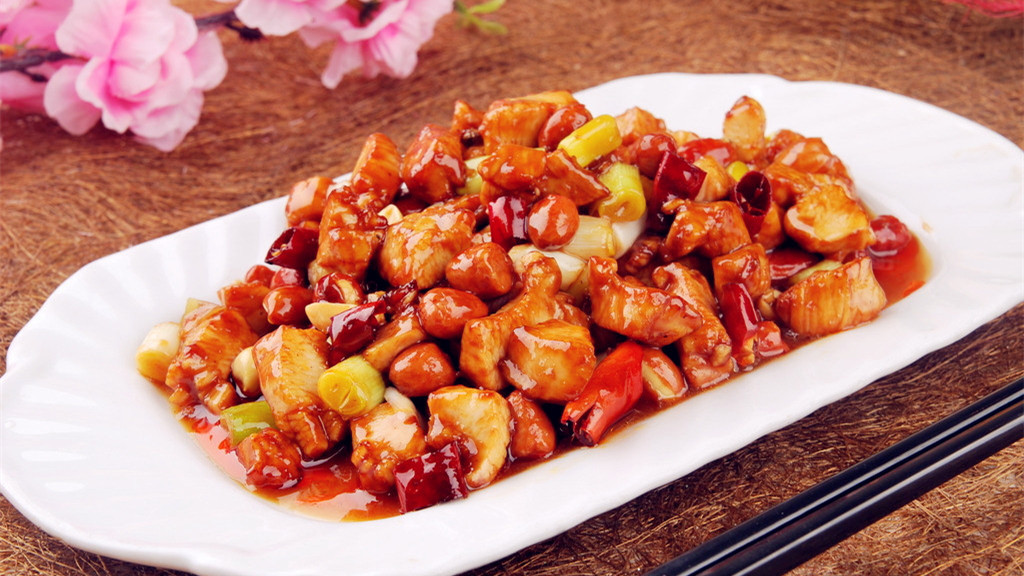
Kong po Chicken
ji

Hot & Spot Shrimp
xia


Sichuan Snake


Sichuan cuisine include a number of famous snack dishes.they are called “xiaochi”in Chinese.Sichuan snacks are very popular .they have unique flavors.they are cooked with various seasonings. Chengdu snacks have a long history.they have a particular style in color,smell,taste and shape.Each restaurant in Chengdu tries to offer a variety of traditional snack in an attempt to satisfy customers at home and abroad.Such an effort saves travelers much time in searching for snack places marked on the city guide map.


Foodie"s Paradise in Sichuan

Shunan Bamboo Forest


The south Sichuan Bamboo Sea is a ” China’s National Scenic Spot”, one of the ”40 Best Tourist Attractions”. It locates in the southwest Liantian Mountains which border the Changning County and Jiangan County of Yibin City. The place seems like a misty vast green sea. Hence comes the name of ”Bamboo Sea”. The  southern Sichuan Bamboo Sea, one of the most beautiful land of happiness given by the nature, with many cultural relics and historic sites screened by green bamboo, is a fresh and clear back garden of Yibin City. A tour to the beautiful and elegant Bamboo sea is a tour to the splendid bamboo culture of long history, a tour more mysterious and interesting, far  from the mortal world.


There are some fragmentary precious plants, some special local animals and many valuable fungi besides its beautiful, ancient natural landscape and wonderful cultural relics in Bamboo Sea. According to the statistics, in many kinds of plants Spiniclose Tree Ferm.” The live fossil in the earth.” also called ferm has the same prosperous period as dinosaur which are prosperous in the Carboniferous Period  of the Paleozoic Era about 350 million years ago. It can only be seen in some rare area in the world. It exists a few in Sichuan, Yunan, Guizhou etc. And it has been protected as the national first class plant. It is the ”Live Specimen”. Which is used to study the relationship between papaeobotany and palaeoclinatilogy, palaeogeograohy, palaeogeology, it also plays an important part in studying the evolution process of the plants and the transmutation of the crust.


The special demeanor exists in Bamboo Sea, it has the sole animal -xylophone Frog which is shorter than the common frogs with the green bottom and white ”frog dress”, the ”xylophone Frogs” reveals their pink tender flesh on their chests and belly, and they are very lovely. They are singers in the Bamboo sea, and the high-technology” Stringed Instrumentalists” who can sing Dong-dong- dong- dong”, ” Duo- mi -duo – duo”, in which the acoustic fidelity sounds like wooden piano, and the acoustic fidelity arefive scales in common. Some even are six to seven scales, the melody is very good which makes the bamboo sea more poetic charm.


The first city on the Yangtze River-Yibin city, with rich resources, special regional advantages, and wide development prospects, will be constructed to be an important hub of communications and a commercial center at the juncture of three provinces of Sichuan, Yun’nan and Guizhou, an ideal growth point in the western regions of Yangtze River Economic Zone, a regionally eccentrically city in the west of China. We would like to take this opportunity, on behalf of Yibin Municipal Party Committee, Yibin Municipal People’s Government and 5 million people in Yibin to warmly welcome you to Yibin, going forward hand in hand, and taking a prosperous,   civilized, and opening Yibin into the brilliant and magnificent 21 century.


b


More infomation


the best season for travelling:spring and autumn
traveling time suggestion: two days
open time:whole day
ticket:110RMB for peak season

120RMB for slack season


Shunan Bamboo Forest

2016年1月12日星期二

4-Day Chengdu, Dujiangyan, Qingchengshan and Panda Tour


Tour Overview


Duration:4 Days
Tour Type: Private
Departure: Everyday


Tour Itinerary


Day 1 Chengdu Arrival (L or D) 


Upon your arrival, the tour guide will meet you at airport or railway station and then take you to check in the fixed hotel there.

After a short break, take afternoon time to visit Wuhouci Temple,  a place to commemorate Zhuge Kongming in Three Kingdoms around 2 and 3 centuries. Zhuge Kongming is an avatar in China. And then, have a visit to Du Fu Cottage, the poet Du Fu lived in Chengdu for years. In the west suburbs of the city, he built for himself a thatched hut and wrote a lot of poems here. The poet’s thatched cottage is an important scenic and historic spot in Chengdu.


Day 2 Chengdu (B, L) 


Today we will drive to explore the mysterious Mt. Qingcheng famed of Daoism, Located about 15 kilometers from the southeast of Dujiangyan City, Sichuan Province, Mt. Qingcheng lies amidst the Western Mountains covered with pure white snow, and dominates the fertile land of Chengdu. You can take the cable car for deep feeling of the Mt.Qingcheng. Then, explore the  marvelous Dujiangyan Irrigation. It is an Irrigation System, which was built over 2250 years ago to irrigate the Chengdu Basin, and it has been cultivated the whole basin for more than 2000 years already. There is a small inner lake called Yuecheng Lake we can also get a glance.


Day 3 Chengdu (B, L) 


Our focus today is the Chengdu Research Base of Giant Panda Breeding , where you can see the Chinese lovely pandas.   Sanxingdui Museum in Guanghan,  Founded in 1992, this museum occupies an area of 7000 square kilometers, and has a exhibition of the cultural relics excavated from No1 and No2 sacrificial pits of Shang Dynasty (from 16th-11th century B.C.). There are thousands of pieces of invaluable relics such as bronze ware, jade ware, gold ware, pottery, and bone ware on the exhibition, where you can get a closed look and learn more about the ancient China.


Day 4 Chengdu Departure (B) 


Enjoy your free time before departure and we will drive you to airport at the fixed time.


Hotel accommodation
five-star hotel: Holiday Inn Crowne Plaza or Chengdu Haiyatt Hotel
four-star hotel: Chengdu Tianfu Sunshine Hotel (Amara)


Price Includes:Price Excludes:
 Pick-up and drop-off service. Personal Expenses.
 Air-conditioned vehicle(car,van or bus).Click here for vehicle mode Visa Fees.
Entrance tickets as listed. Tips for the tour guide and driver.
Meals as listed in the itinerary, B=breakfast; L=lunch D=Dinner.
English-speaking tour guide. (Other languages available with extra cost.)
Hotels accommodation (twin share bases) as listed in the itinerary.
Note:

Price may vary according to different seasons.You can extend your stay in Chengdu after this package finished, we will keep the discount hotel rate for you for the extended days.

How to Book?

1. You can book online and pay cash to tour guide, just inform us your hotel in Beijing, we will send you confirmation email.

2. When you arrive in Beijing, our tour guide will call you the night before the tour to inform pick-up time in the next morning.


4-Day Chengdu, Dujiangyan, Qingchengshan and Panda Tour

2016年1月11日星期一

Dujiangyan

Chengdu Tours Guide


Chengdu is the capital of “Heavenly State” (Tian Fu Zhi Guo), habitat of giant pandas and city of cotton-rose hibiscus.


Located in the west of Sichuan Basin and in the center of Chengdu Plain, Chengdu covers a total area of 12.3 thousand square kilometres (4,749 square miles) with a population of over 11 million.


The history of Chengdu can be traced back 2,400 when the first emperor built his capital here and named the city.Chengdu was the place where the bronze culture, an indispensable part of ancient Chinese culture, originated, the place where the Southern Silk Road started, and the place where the earliest paper currency, Jiaozi (not the dumpling!), was first printed. It is listed among the first 24 state-approved historical and cultural cities and owns 23 state and provincial cultural relic units.


The Dujiangyan Irrigation Project is long-established water conservation works. It is 56 kilometers (34.8miles) west of Chengdu at Dujiangyan city lying in the middle reach of Minjiang River, which is the longest tributary of Yangtze River.


Since ancient times the Minjiang River has surged downward from Mt. Minshan thrusting itself into the Chengdu Plain. When reaching the flatlands the rivers speed slowed down abruptly. Thus the watercourse filled up with silt making this area extremely vulnerable to flooding. The people living on the Chengdu Plain consequently suffered a great deal from frequent floods.The project effectively put the flooding waters under control.


                                                                                                           dujiangyan


For over two thousand years the whole system has functioned perfectly, serving  not only as flood prevention but also as an immense source for irrigation as well as a means to facilitate shipping and wood drifting. It has contributed greatly to the richness of Chengdu Plain and helps it earn its reputation as “The Land of Abundance”.


Dujiangyan

2016年1月8日星期五

Jiuzhaigou


Jiuzhaigou valley is dominated by three drainages, Rize and Zechawa streams which flow from south to north, meeting at the centre of the site to form the Shuzheng which drops 1,000m to the north end of the reserve. There it meets the Zharu stream flowing north-west from the eastern boundary to form the Jiuzhaigou river, one of the sources of the Jialing river, part of the Yangtze River system. Most of the park boundaries follow the high mountain ridgelines defining the watersheds of these rivers. There are 114 lakes, 47 springs,17 groups of waterfalls, 11 rapids and 5 tufa shoals within the reserve.


Many of the lakes there are classic ribbon lakes in glacially formed valleys, dammed by avalanche rock-falls and stabilised and terraced by carbonate deposition. Above or below some of the lakes are calcareous tufa dykes and shoals. Shuzheng Lakes and Nuorilang Lakes, with 19 and 18 lakes respectively and much larger in size. There is a number of large and spectacular waterfalls, including Xionguashai (Panda Lake) Fall which drops 78m in three steps, and the Zhengzhutan (Pearl Shoal) Fall, which drops 28m in

a 310m-wide curtain of water, both in the Rize valley.


Basic Information about Jiuzhaigou

Name: Jiuzhaigou Valley Scenic and Historic Interest Area.

Administrative Bureau of Jiuzhaigou, Jiuzhaigou Town, Jiuzhaigou County, Sichuan Province, China.

ALTITUDE :2,140m (Luveihai, Reed Lake, at the mouth of Jiuzhaigou) to 4,558m (Mt. Ganzigonggai).

Climate

The area has a subtropical to temperate monsoon climate, with a succession of zones cooling with altitude. Valleys are warm and dry, the middle mountain slopes cold and damp. At Nuorilang at 2,400m in the Shuzheng valley the mean annual temperature is 7.3°C, the mean January temperature is –3.7°C and the mean July temperature is 16.8°C. The total annual rainfall there is 761mm but in the cloud forest between 2,700m and 3,500m it is at least 1,000mm. 80% of this falls between May and October as the monsoon moves up the valley giving mild, cloudy, moderately humid summers. Above 3,500m the climate is colder and drier. Snow falls between October and April . Monthly precipitation totals are: January 15mm, February 24mm, March 36mm, April 43mm, May 87mm, June 96mm, July 104mm, August 82mm, September 86mm, October 54mm, November 26mm and December 18mm .


-> Book Jiuzhaigou hotels…


> Book Jiuzhaigou and Huanglong Tours, start from Chengdu, China.


Jiuzhaigou

2016年1月7日星期四

Huanglong

The”Earthly Legendary Pool”

Huanglong Scenic and Historic Interest Area,lies in the middle part of Min Mountain in Song Fan Country, Sichuan Province, southest China, where the source of Min River and Tuo River come from.It comprises the Core Scenery of Huanglong,peripheral spots of Danyun Gorges, Snow Treasure Peak,Snow Mountain Ridge,Hongxing Rock, Munigou and West Gully.Huanglong is best know for its “Four wonders”,namely, travertine flows zigzag their waysthrough virgin forests,much like a gold giant dragon.Over 3000 colered ponds are clustered ,with jade like crystal water running down the overlapping terraces, pouring into eight pond groups.They present a fantastic and miraculous picture like golden scales of a giant dragon.Hence Huanglong is affectionately called the “Sacred Wonderland” and “Earthly Legendary Pool”.


The calcium bicarbonate deposites take shape of collapsed travertine, travertine flow beach, travertine waterfalls,and other unique karsts landscapes in Huanglong.The large travertine accumulations,created by the arctic-alpine enviroment,are rarely seen in other parts of the world. layer over layer,travertine ponds look like terraces under green waters dazzling under the sun.Huanglong is well known for its large number and size of Bianshiba colored ponds in the world.

Here,as buddhism, Taoism, Sakyamuni and Confucianism well intergrate; Huangong is believed to be a holy religious place.

Huanglong is also noted for its abundant plant resources ,complex vegetation types,and complete vertical vegetation zonation.Ancient trees are everywhere,feeding the dropping fruits,Jianzhu bamboo, Shuiliu willow woods,azaleas and primroses.Huanglong is also a paradise for mixed breeds of animals and a conservation center for some rare species. It is thus called as the Plant Kingdom in Frigid Zone & Temperate Zone.

With so many wonderful views gathered in one place, Huanglong is not only the treasure of China, but also the treasure of the world.


Huanglong